You can't give good feedback on work your client didn't actually make. If you review, coach, critique, or edit, and someone hands you an AI-generated draft dressed up as their own, you've just been booked to grade a robot. This clause requires human work, lets you charge for the time an AI submission wastes, and gives you a clean, contractual way to say no.
What it covers:
1. Client's own human work. The client agrees to submit only work they personally created through their own human effort, with no AI-generated material without advance disclosure and your written approval.
2. Attestation. At intake or each submission, the client attests the work is their own human work, and you're entitled to rely on that attestation.
3. Your rights on non-conforming submissions. Decline the review, require a conforming resubmit, charge a re-review fee or your hourly rate, and suspend or terminate for repeat violations, with no refund. Time you spend identifying AI work is billable.
4. No guarantee on AI work. Your feedback assumes human-created work. You make no representation about, and aren't responsible for, outcomes from an AI-generated submission.
5. Optional Zero-AI (Human Craft) add-on. A stricter, all-or-nothing term: no AI generation anywhere in the engagement, covering drafts, outlines, and revisions, with fee forfeiture on breach.
Who it's for:
Designers, coaches, consultants, editors, reviewers, and educators. Anyone whose service is feedback on a client's own work. If you run critiques, portfolio reviews, copy edits, or a coaching container, this turns "submit your real work" from an awkward conversation into a term.
How it works:
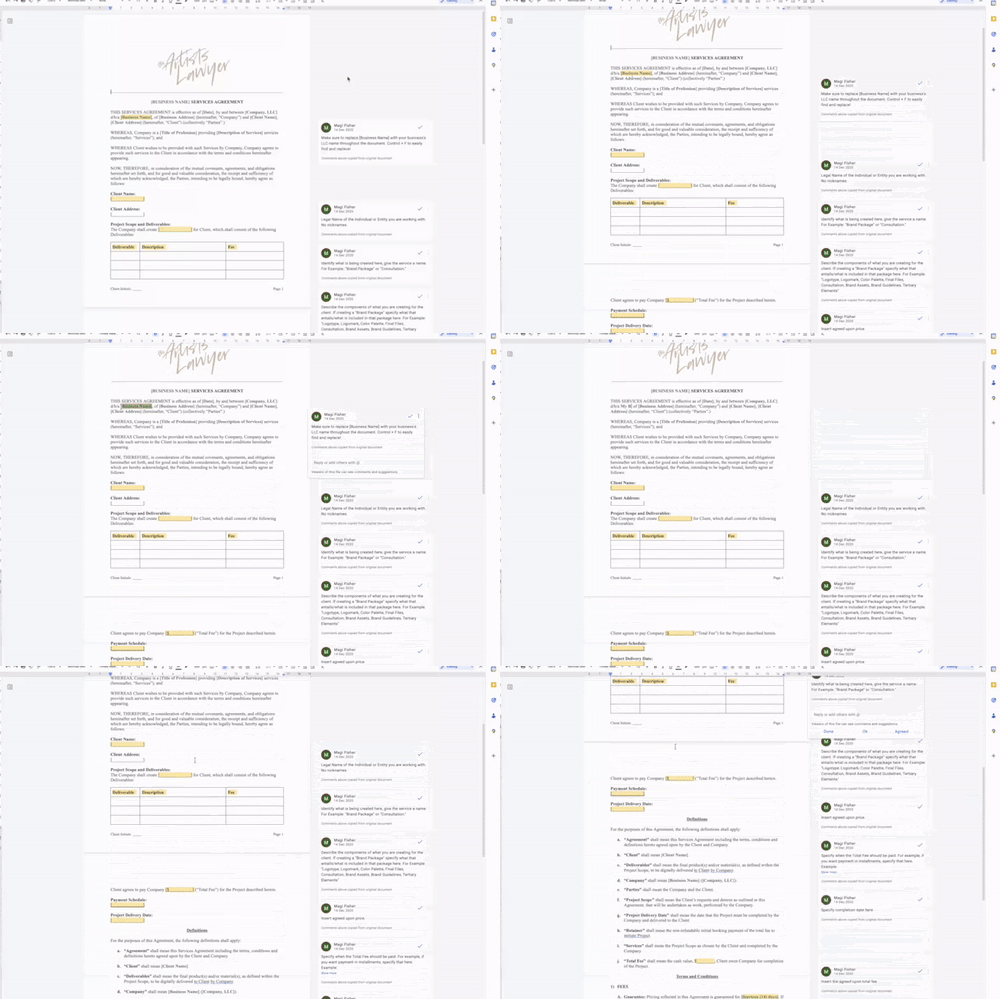
Place it under your Client Responsibilities section as Section [X]. Fill in the re-review fee and hourly rate, decide whether to switch on the optional Zero-AI add-on, and copy-paste. You receive a PDF with a Google Doc link, highlighted customization fields, and implementation notes.
Why a real clause matters:
"Please don't use AI" is a vibe. A term with an attestation, a re-review fee, and termination rights is leverage, so you're paid for your time either way and never quietly stuck reviewing a machine.
Related AI Clauses
Each clause covers a different direction of AI use. Pick the one, or ones, that fit:
• To govern how your client uses AI on the work you deliver → AI Clause
• To disclose your own use of AI in your process → AI Disclosure Clause
• To require clients to submit human work for review → this clause
Want all three? The AI Protection Kit bundles them into one purchase.
Browse the full set → theartistslawyer.com/collections/ai
The Artists' Lawyer templates are attorney-drafted, not legal advice.