If you use AI anywhere in the work you deliver, your clients are entitled to know, and your contract should be the thing that tells them first. This clause discloses your AI-assisted process the right way: broadly enough to actually cover how you work, without giving up an inch of your creative control.
Most creative businesses are already using AI somewhere, usually because it is built into software they already pay for. You do not need an AI policy to handle that. You need one clear, well-drafted section in your contract that says so before a client thinks to ask.
What it covers:
1. Assistive tools. Names the AI and machine-learning assisted tools your process may use, framed as part of your signature style rather than a substitute for it. Noise reduction, retouching, object and distraction removal, masking, upscaling, culling, color work, layout, and the preparation of renderings and mockups.
2. Human direction. Every creative and artistic decision stays under your judgment. The tools assist your established workflow. They never replace your control over the finished work.
3. Generative and composite work. A deliberately broad, non-exhaustive disclosure: compositing multiple images or elements, adjusting or repositioning subjects and expressions, generating concepts, samples, mockups, renderings and styling guides. Written so you are covered for what you may do, not boxed into a promise you could breach the first time a client asks for something.
4. Renderings and mockups are concepts, not guarantees. The clause every designer, florist and planner has been missing. A rendering is not to scale and is not a promise of specific materials, stems, finishes, quantities or cost. Covers substitution of comparable quality when an item is unavailable, discontinued or lost to crop failure or supply disruption.
5. Scope. Limits the disclosure to the work delivered under that one agreement, so it does not sweep in the rest of your business.
Who it's for:
Any creative whose work passes through AI-assisted software. This is not a photographer-only clause and it is not limited to editing. Photographers, videographers, studios and content creators. Designers and interior designers producing renderings. Florists and planners producing mockups. Stylists building look and outfit guides.
The [Provider] fill-in flexes to however your contract names you, and every subsection is modular: delete anything that does not describe how you work.
How it works:
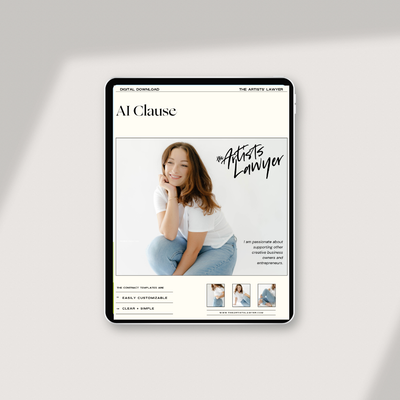
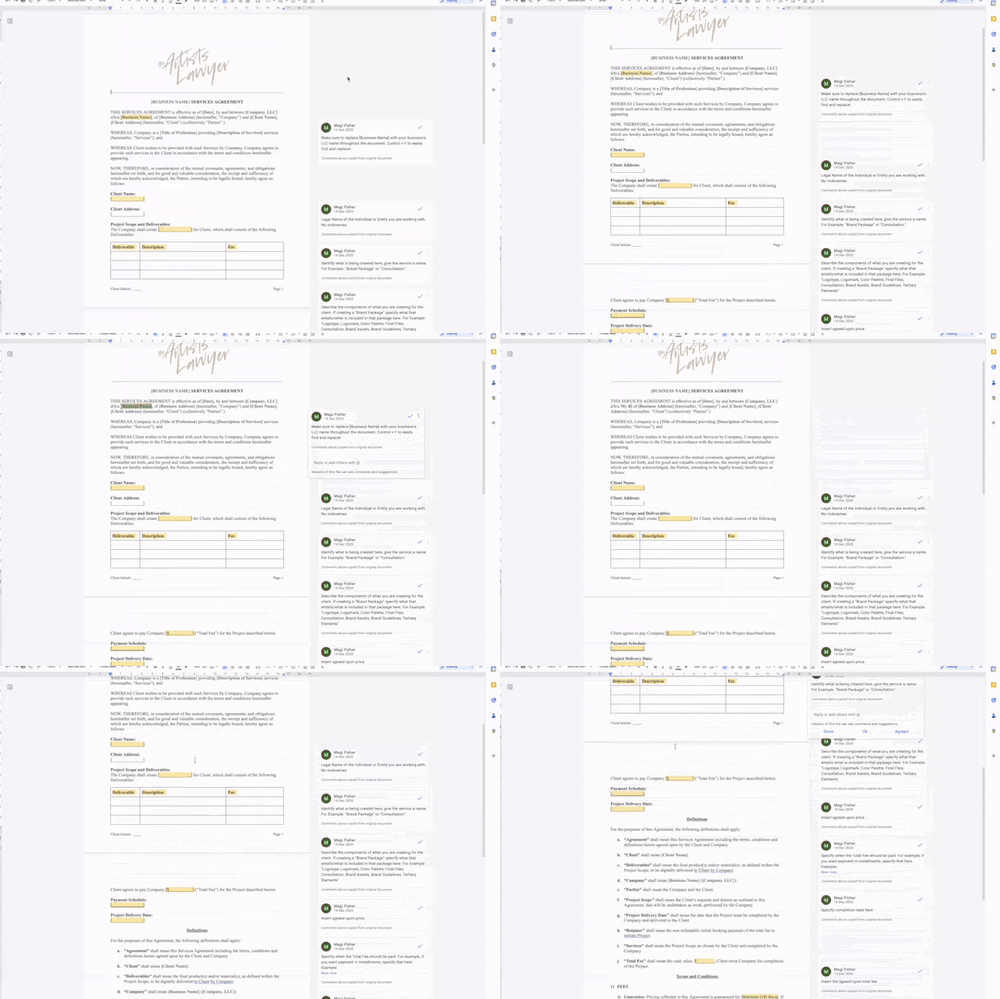
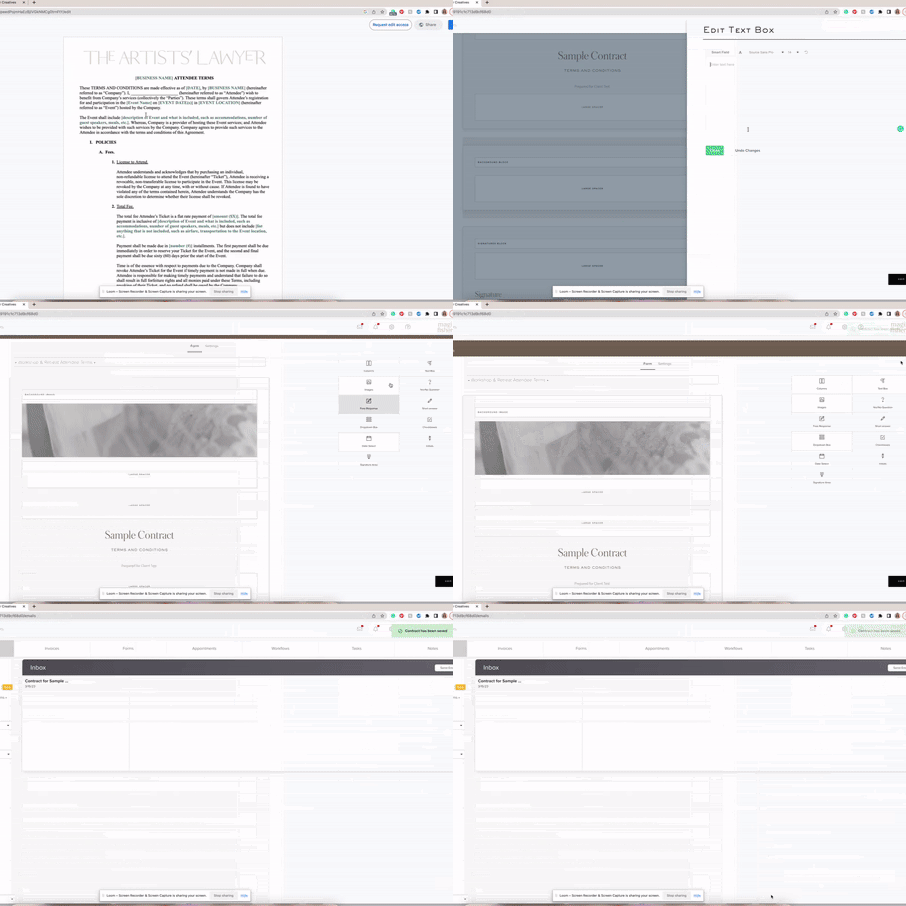
Nest it inside your existing editing or artistic-style section, or drop it in as its own Section [X]. Replace the [Provider] fill-ins, delete the subsections you do not need, and copy-paste. About five minutes. You receive a PDF with a Google Doc link, highlighted customization fields, and implementation notes.
Why a real clause matters:
"I use some AI in editing," buried in a DM, is not consent. And a clause that promises you will never generate anything is worse than none at all, because the first client who asks for a composite puts you in breach of your own disclosure. This one is drafted to be broad on purpose, by an attorney who works with creatives every week.
Related AI Clauses
Each clause covers a different direction of AI use. Pick the one, or ones, that fit:
• To govern how your client uses AI on the work you deliver → AI Clause
• To disclose your own use of AI in your process → this clause
• To require clients to submit human work for review → No-AI Submission Clause
Want all three? The AI Protection Kit bundles them into one purchase.
Browse the full set → theartistslawyer.com/collections/ai
The Artists' Lawyer templates are attorney-drafted, not legal advice.